




The Bench
Making The Bench: a small film about a small disagreement
Somewhere in England, a Parish Council is at war over a bench. That's the whole film.
I wanted to make something in the register of the British comedies I grew up on — Vicar of Dibley, Detectorists, the Two Ronnies — where the comedy is verbal, the stakes are absurdly low, and everybody is utterly convinced they're the reasonable one. AI tools tend to push you toward spectacle. I wanted to push the other way: muted palette, 16mm grain, talking heads, long silences, and a single brass plaque doing more dramatic work than it has any right to.
The story comes first
The hardest part wasn't the generation. It was the writing.
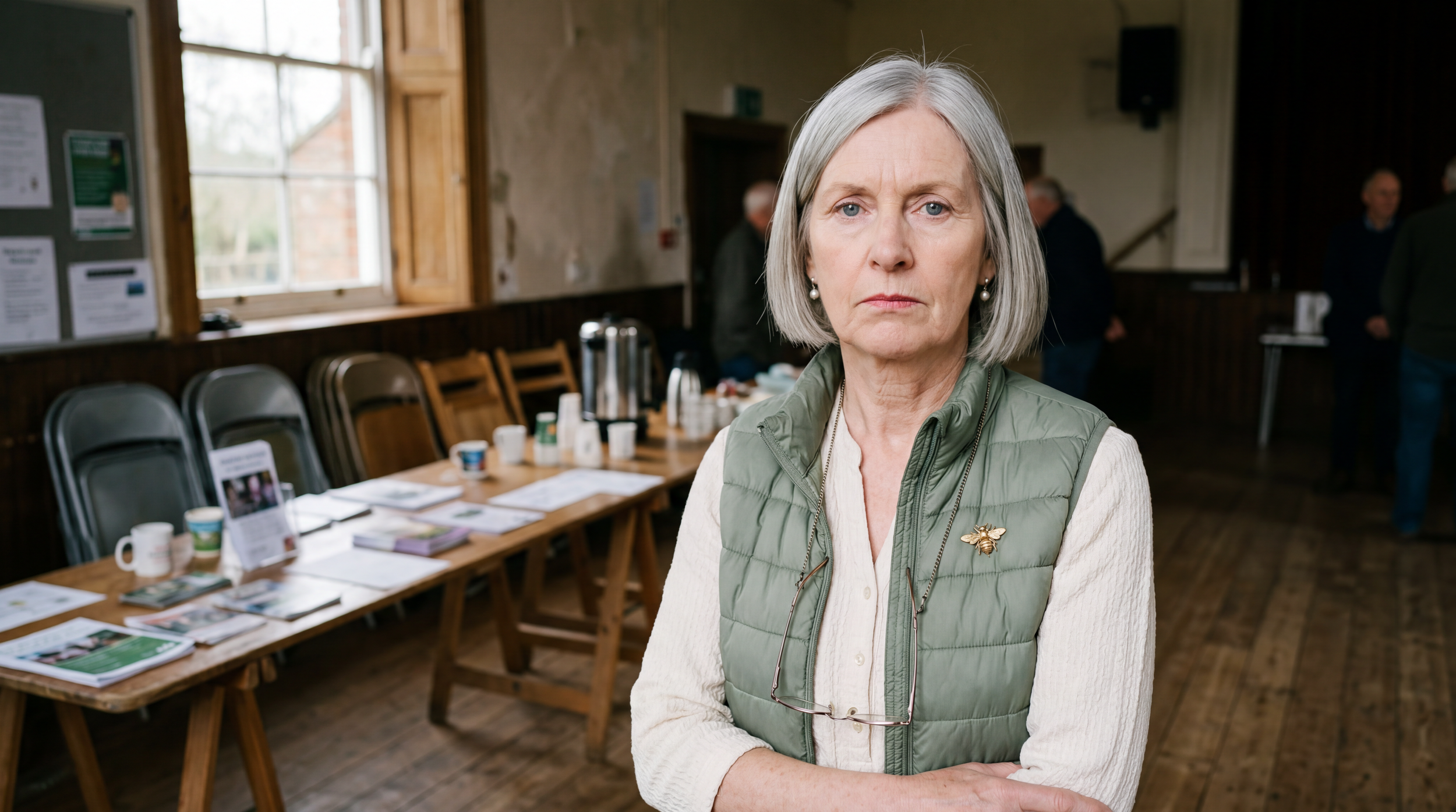
The first cut was a string of sketches: Margaret the Chair, Derek the Treasurer, Chloe the shellshocked new minutes secretary, the vicar, the groundskeeper. Funny in isolation, but the film didn't go anywhere — there was no through-line, and the ending (a multiplying row of benches, visually escalating) wasn't a joke so much as a flourish. It was missing a human payoff.
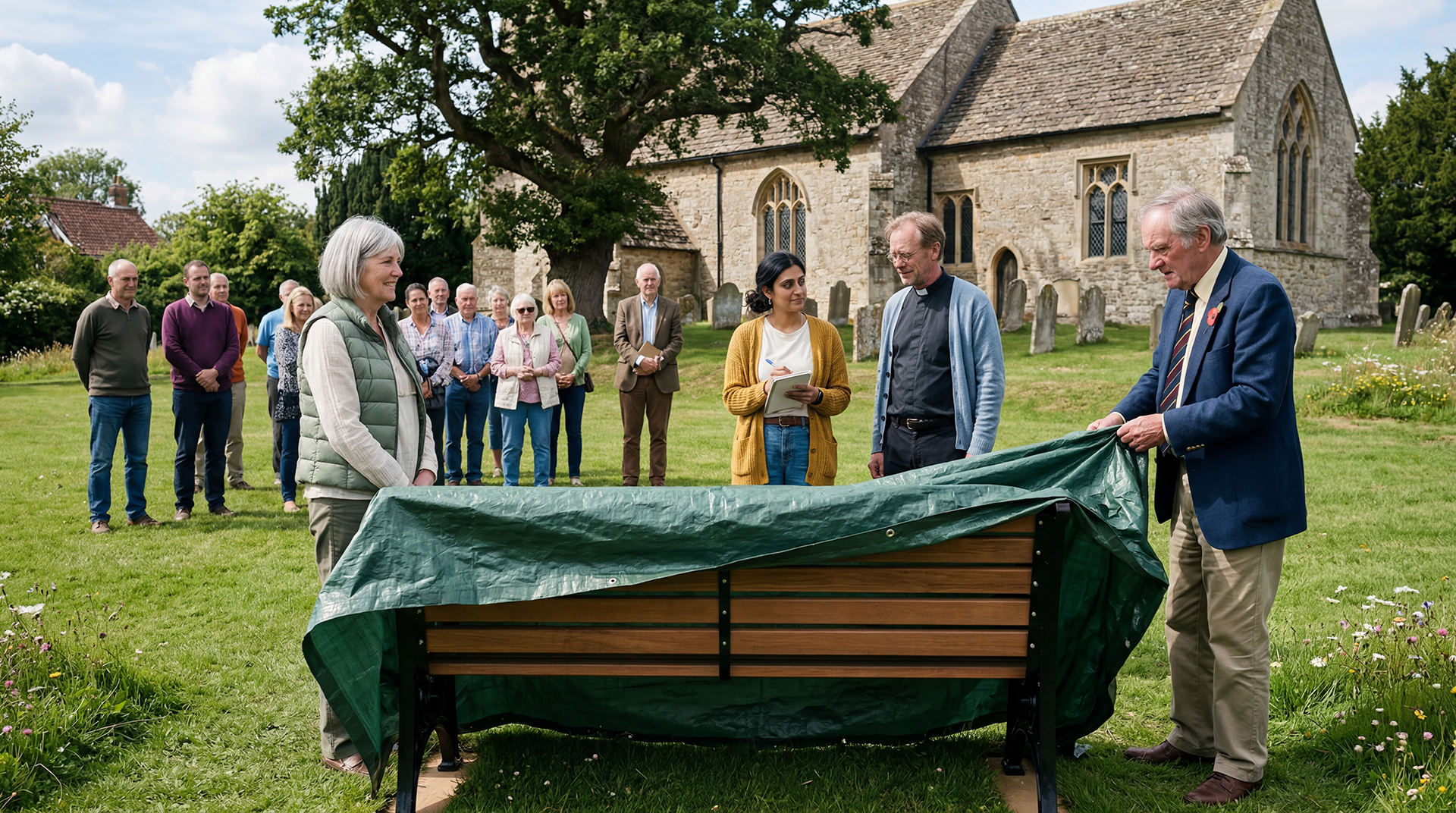
So I rebuilt it around a single planted gun: Derek insists the bench isn't regulation. Nobody listens. The running gag becomes that nobody will actually sit on it — they perch, they hesitate, they read his laminated warning and walk on. Then, at the unveiling, Derek decides to demonstrate precisely how someone could have an accident, and the bench obliges. He was right. He has never been less rewarded for being right.
The mechanism is straight Detectorists: the same handful of people in the same two places, colliding repeatedly, until a tiny situation curdles. Eighteen shots, two locations, six characters, one bench.
The look
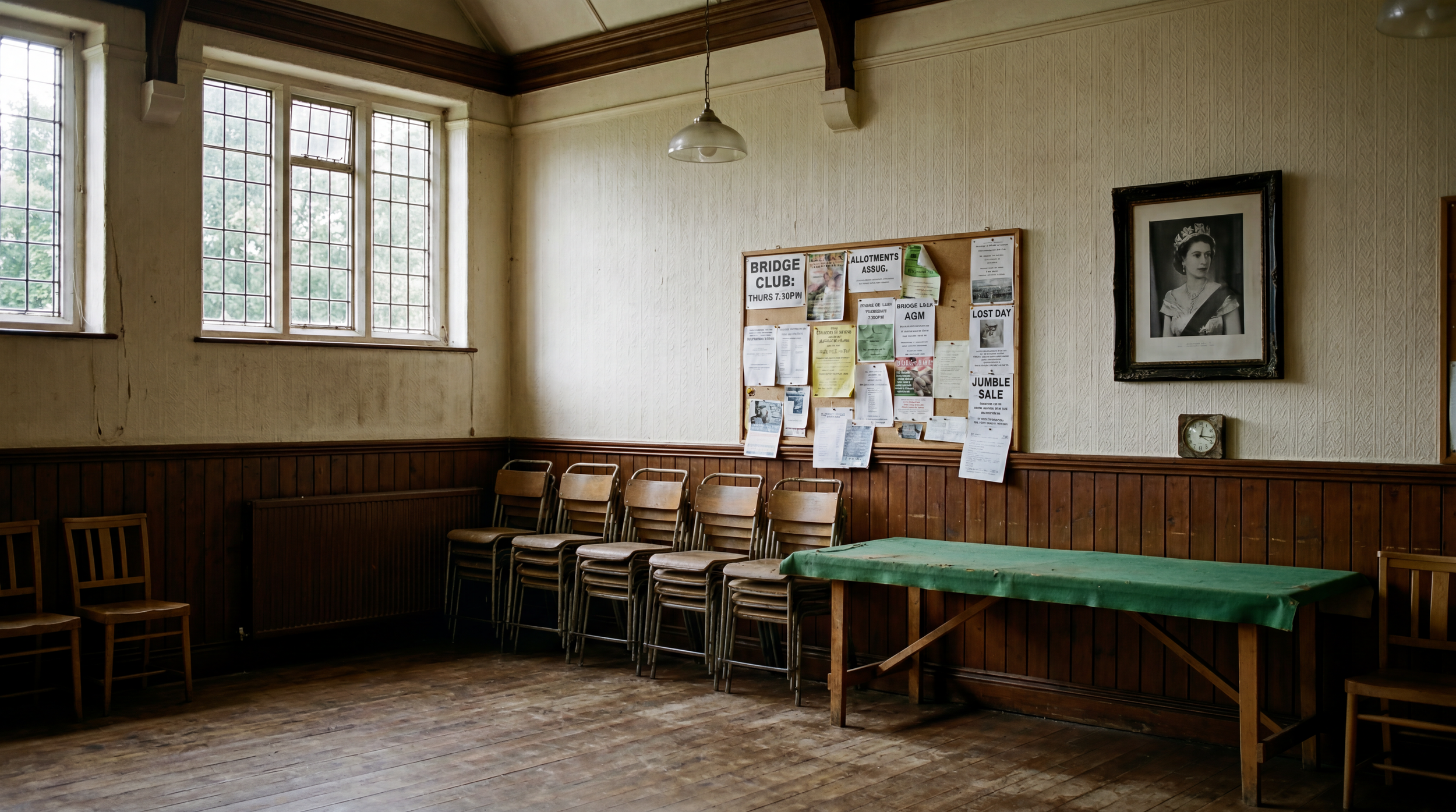
Everything is shot in the documentary mockumentary register — handheld talking heads, slight wobble, beige walls and stained-glass light. Reference prompts were built around two anchors: the village hall (1930s wood panelling, anaglypta wallpaper, a single pendant bulb, a noticeboard nobody has touched since 2007) and the bench itself (weathered oak on a village green, a brass memorial plaque, soft overcast light). Holding those two locations consistent across the whole film was what made it feel like a place rather than a collection of generated shots.
Where Aleph earned its keep
Two shots came back from Runway about 90% right. Normally, the painful answer is to reprompt and hope you can rebuild the performance — which, in a film built on small expressions and timing, you usually can't.
This time I used Aleph to fix them in place. One was a background element that needed removing without touching the foreground performance. The other was a small lighting/colour correction that would have meant losing the take entirely. Both took minutes. Both kept the takes I'd already fallen in love with.
That's the workflow shift other AI filmmakers will recognise as significant. The bottleneck on a project like this has never been generation — it's been the fragility of a good take. If you can repair instead of reprompt, the whole production calculus changes.
Sound and music
Dialogue was layered in post — Runway gives you visuals, but the silences and beats are everything in this style of comedy, and you need full control of the edit to land them. The score was a single ElevenLabs prompt aimed at "wistful village fête," generated quickly and dropped underneath the title card and end crawl. A melancholy cello holding one note while a parchment crawl scrolls past is funnier than silence.
What I learned
Three things. One: AI films get better the more you treat them like films — story spine first, then visuals. Two: running gags are free real estate. Plant something in shot three, pay it off in shot fifteen, and the audience feels rewarded rather than spectated-at. Three: the moment you can edit a take instead of regenerate it, the medium starts behaving like cinema rather than slot machines.
The Bench is three minutes long. There's a Parish Council. There's a new bench. There's one man who said it wasn't safe.
You should have listened.